INTERVIEW
Lea Naisberg
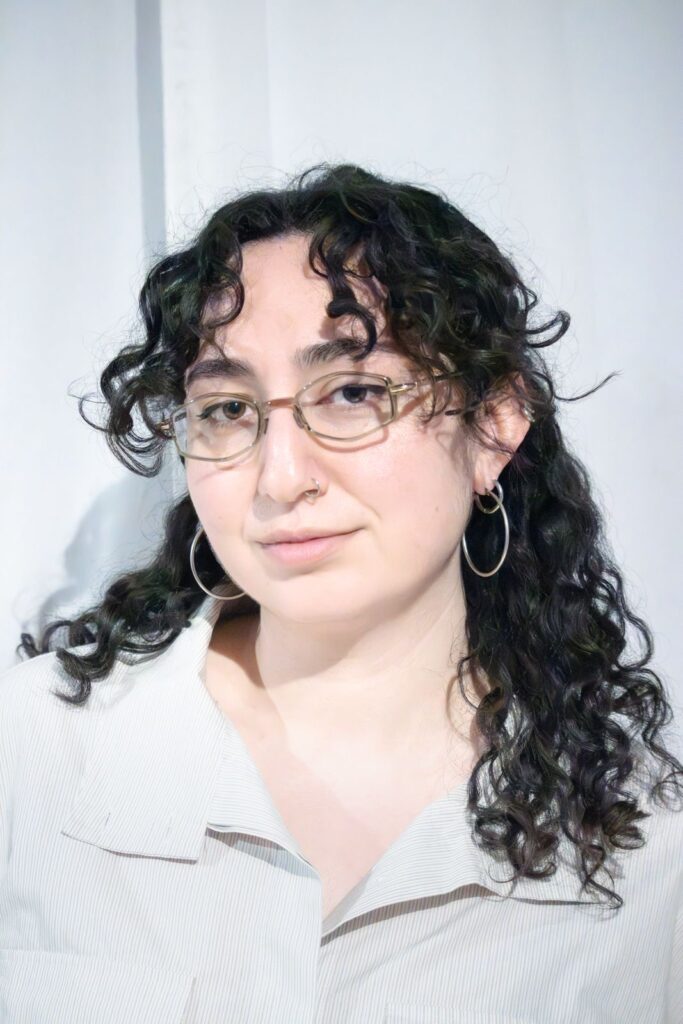
Born in New York City and raised between NYC and Buenos Aires, Lea Naisberg is a graphic designer currently working at SMLXL in Barcelona and the founder of Creative Coding NYC. With a background in Computer Science and a self-taught practice in creative coding, she brings a methodical yet exploratory mindset to typography, using code to push visual systems into playful, unexpected territory. Our paths first crossed during her Master’s at Elisava, where the interactive project she developed in our type systems workshop went on to win a Type Directors Club award in New York. Now, she is joining the School of Systems to lead a two-day workshop on interactive, moving type using p5.js. In this interview, we talk about bridging the gap between rigid logic and experimental design, how user interaction alters the meaning of text, and how traditional designers can get past the initial fear of writing code.
Martin: It’s a great full-circle moment to have you teaching now for the School of Systems! I’m so happy about this. We met at Elisava. You designed this amazing interactive type project “Swing Display” in my Type Systems workshop at the Visual Design Master at Elisava, which then won a Type Directors Club award in New York. Congrats again! Readers can read here about how the project came to be, but please tell me a little about the feedback you got afterwards.
Lea: Thank you Martin, I’m super excited about teaching the workshop too! The feedback has been wonderful and it’s been very encouraging overall and the most rewarding part is that it came both from the graphic design/typography field and the coding field, which really goes to show how compatible these two areas are, and how strong a piece can be when combined.

Martin: You have a background in Computer Science, which people often associate with rigid logic and strict rules, yet your design work is incredibly playful and unconventional. You are a fantastic musician! How do you use the constraints of code to actually free up your creativity rather than restrict it?
Lea: I don’t think code has to be seen as something rigid. There’s a lot of uncertainty that goes into writing code, especially when a human is doing it, and it’s that dialog between computer and human that’s unique to it. Then again, as many would say, it’s just a tool for my work, like paper and a pen, or vector software. I like it because I get to create my own world in each program, my own system, my own rules, but then it can run free in different ways by including randomness, easily creating thousands of variations, etc. But it doesn’t end there, a lot of the time there’s a curational aspect to my pieces. I then have to sort through outputs, make tweaks, and reiterate. And then there’s the initial idea or concept of course, which is always the most creative and important part.
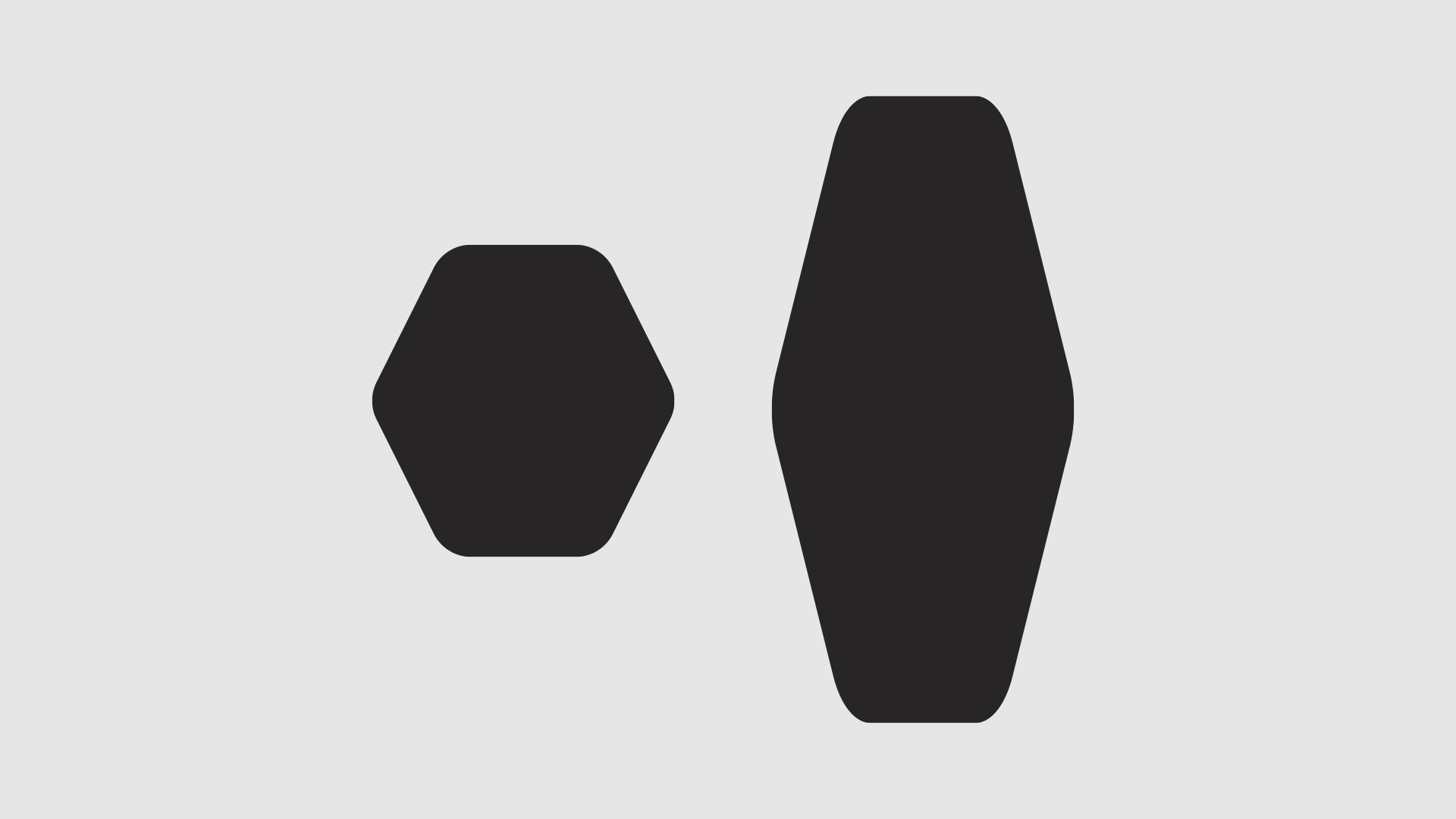
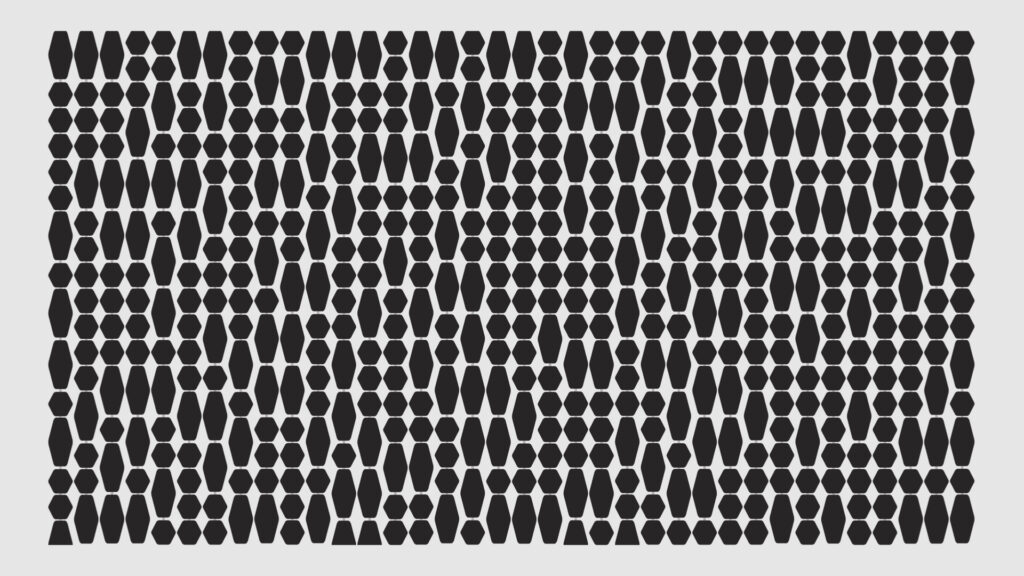

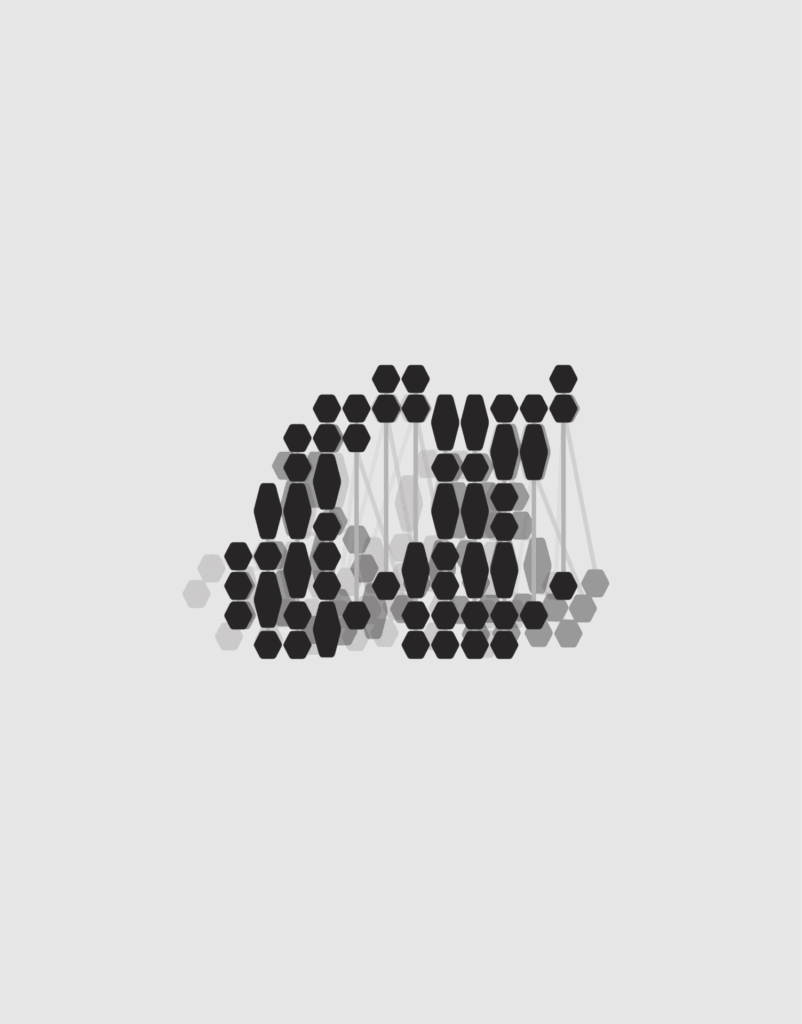
Martin: In your workshop description, you mention that interaction, how a user touches or moves a piece, adds actual meaning to the typography, rather than just making it look cool while in motion. How does changing the way a user interacts with a word change how they read or feel about it?
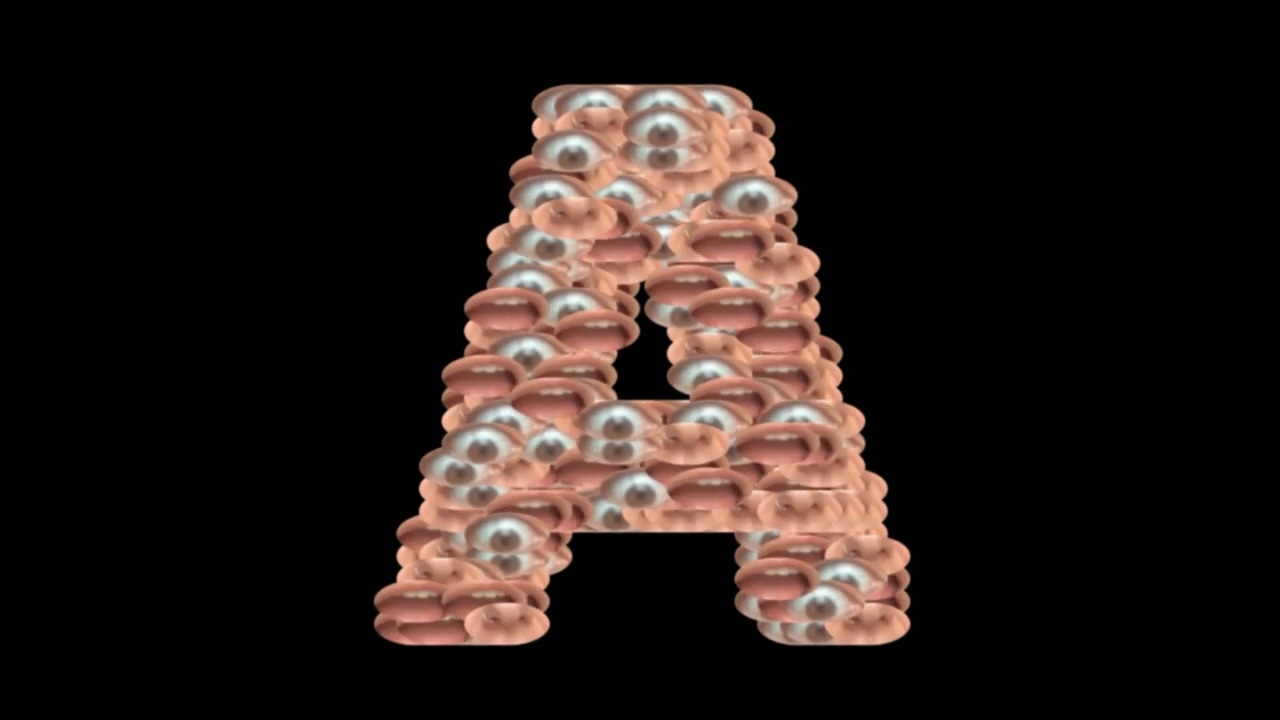
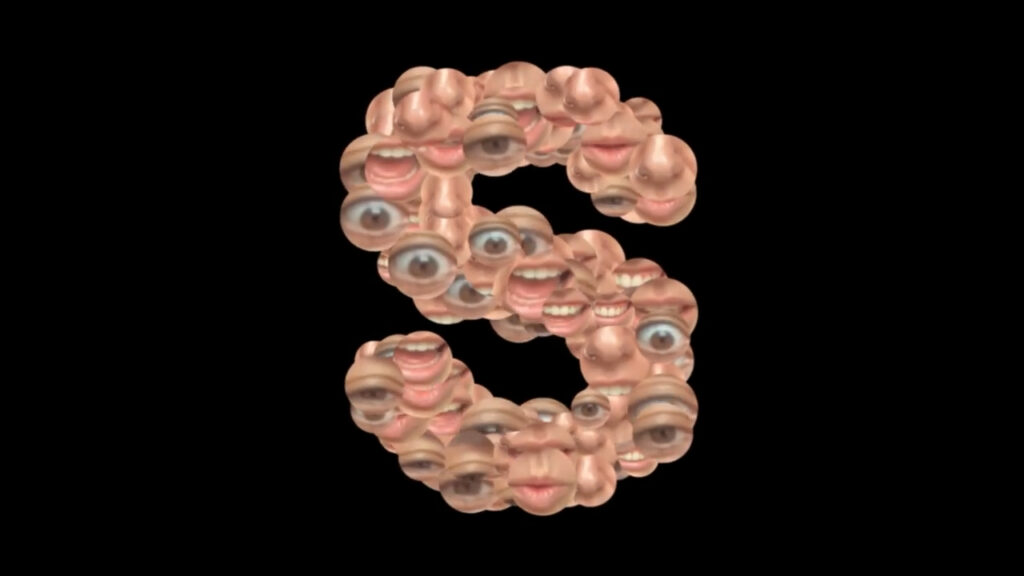
Lea: Ultimately, by interaction with something you’re making it your own. So, it’s not only the artist’s or designer’s piece anymore, it’s also yours in a way, because the piece now includes what you’ve added to it by interacting with it. I don’t want to get too philosophical, maybe an example is better. I have a piece called Face Type that tracks and takes your eyes, mouth and nose to make letterforms. You can also write words or phrases. These can change a lot depending on your expression, whether you’re smiling, frowning, have your eyes open or closed, etc.
Martin: A major goal on Day 2 of the workshop is taking a single interactive sketch and scaling it into a larger, cohesive system. For graphic and type designers who are used to building systems on static layout grids, what’s the biggest shift in mindset when they start building a system based on code and human interaction?
Lea: A key question I ask myself intuitively when designing is “what if..?”. “What if it’s a different layout,” “What if it’s another word,” “what if it’s smaller,” “or bigger.” These are things that I would ask myself intuitively, but then I realized I was just building a system as I designed and accounting for different scenarios. The same goes for a motion system. When it comes to interaction it’s about finding those “what ifs” that help you create an interaction system.
Martin: Your workshop welcomes people with absolutely zero coding experience. For a traditional designer who might feel a bit intimidated, what’s your approach to getting them over that initial fear so they can just start playing with p5.js?
Lea: There’s definitely a degree of trusting the process in the beginning, but you can make very cool pieces with little coding knowledge. I think that’s key because you’re able to see positive results, which motivate you to learn a little more each time! I think it’s better to learn one thing at a time and apply that to a sketch than to try to pack in 10 new things at a time.

Martin: The workshop is just two sessions long. If you were to teach a course which is six sessions long, what would you dive deeper into?
Lea: Probably developing an idea/concept more and how to get more variations/different outputs of it. I’d also go into tool-making (sliders/toggles/exporting). I’d touch on different inputs, like mouse interactions, sound, and webcam poses/gestures, as possibilities.
Thank you Lea!
If this interview made you curious, have a look at Lea’s workshop at the School of Systems, and yes, she will teach a six-session course too. We have limited the number of participants to 15, so don’t wait too long to sign up.