INTERVIEW
Sara Londoño
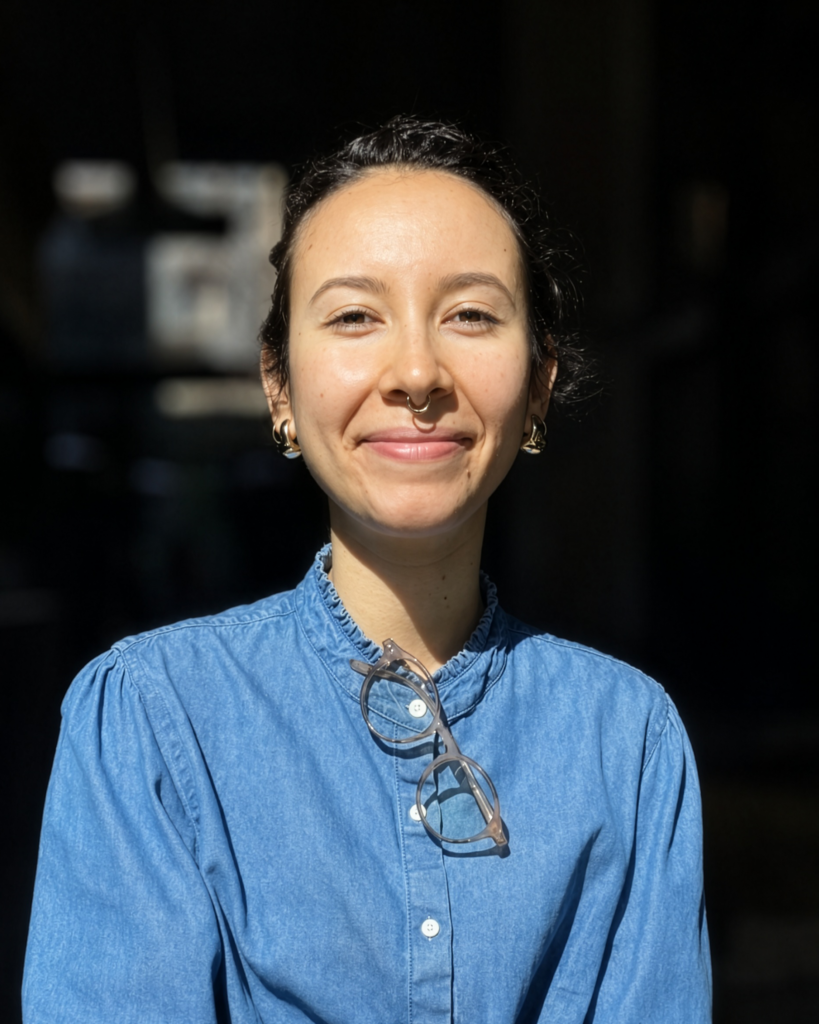
Sara Londoño is a shape designer working with form and structure to create visuals that make complex ideas simple and direct. Her practice explores form as a way of thinking, not just as appearance. She cares deeply about substance, focusing on what is essential in her graphics in order to make space for meaning.
With a background in industrial and interaction design, she is interested in functionality, systems, and how people engage with objects and environments. This perspective informs her approach to illustration and graphic design, where meaning is not fixed but suggested, allowing space for interpretation and reflection, and opening a dialogue between the work and the viewer.
She is interested in how structure and simplicity can coexist with expression, and how restraint in form can still allow for emotional and conceptual depth within visual work.
Martin: Dear Sara, so happy I got to interview for the second time. You call yourself a shape designer rather than a graphic designer or illustrator, and you credit your industrial design background for this. How does thinking in 3D structures and physical forms change how you approach flat, 2D vector abstraction?
Sara: Thank you for inviting me back. It means a lot!
I was lucky that my first introduction to (industrial) design came through a very multidisciplinary teaching team that was also deeply focused on the concept of form, both from a geometric, semantic, and philosophical perspective.
Form is the way things happen in the world. It is what limits them to being what they are and not something else, what allows ideas to exist in the material world. I fell in love with that idea: bringing into the world something that reflects, in an organized way, what is happening in our heads, which is probably much more chaotic.
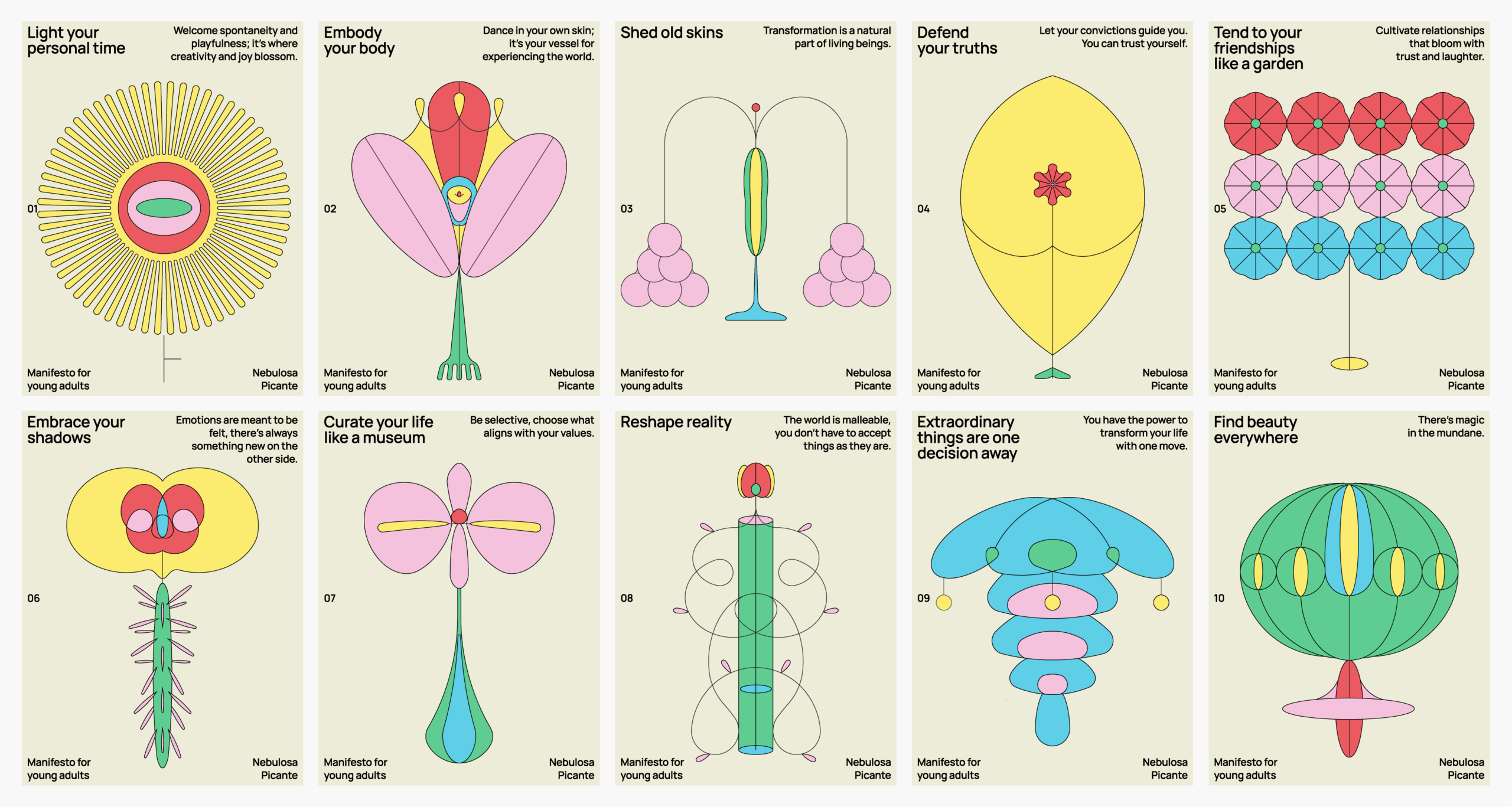
As part of the design process, we would always sketch ideas for objects on paper, refining them until we reached an efficient solution. It is a process in which we translate a tangible problem into form in order to improve people’s quality of life. At the same time, in my free time, I started drawing ideas I found in books, conversations with friends, or online, that were not necessarily meant to become objects. More abstract things like the concept of time or emotions. What would this look like if it had a form? That is where a personal project began that I am still developing, called Give It a Shape, from which both my personal style and my way of seeing the world have evolved.
As an industrial designer, I am drawn to objects that, with very little, solve a lot and still look good. That is what I always try to achieve when I illustrate, whether something figurative or abstract.
Martin: You’ve stated that you aim to create visuals that “communicate before they are understood.” How do you define that pre-cognitive moment of communication? What visual levers do you pull to trigger an emotional response in a viewer before their brain has time to logically analyze the shape?
Sara: A while ago I read Malcolm Gladwell’s book Blink. He describes several examples of how people make decisions in a matter of seconds without even realizing they have made them. From everyday situations like choosing a partner, to more complex ones, like art critics who sense that a piece is fake or experienced police officers who feel that something is off. They do not yet know why, they just feel it.
More than a “gut feeling”, it is the body recognizing patterns it has learned through experience. It has stored so many similar situations that, before the brain starts analyzing, it already produces a response.
That is more or less what I aim for in my illustrations. I try to provoke a specific emotion, depending on the piece, that is immediate, that connects with the viewer before they start looking for an interpretation. Since many of my illustrations are abstract, interpretations tend to vary, but I hope the initial feeling is the same.
I usually start from primitive forms, which I then apply formal transformations to that take them away from their most obvious representation, while still preserving what allows us to recognize them, even if only intuitively. I am interested in exploring that boundary between what is recognizable and what is abstract, because I think that is where that first emotional reaction appears.
Usually, composition plays an even more important role than form, because it creates tension, balance, rhythm, and relationships between elements. I believe those relationships are what the body perceives first. And recently, color has also become an important tool for me to reinforce that first impression, giving hierarchy, grouping elements, and guiding the eye.
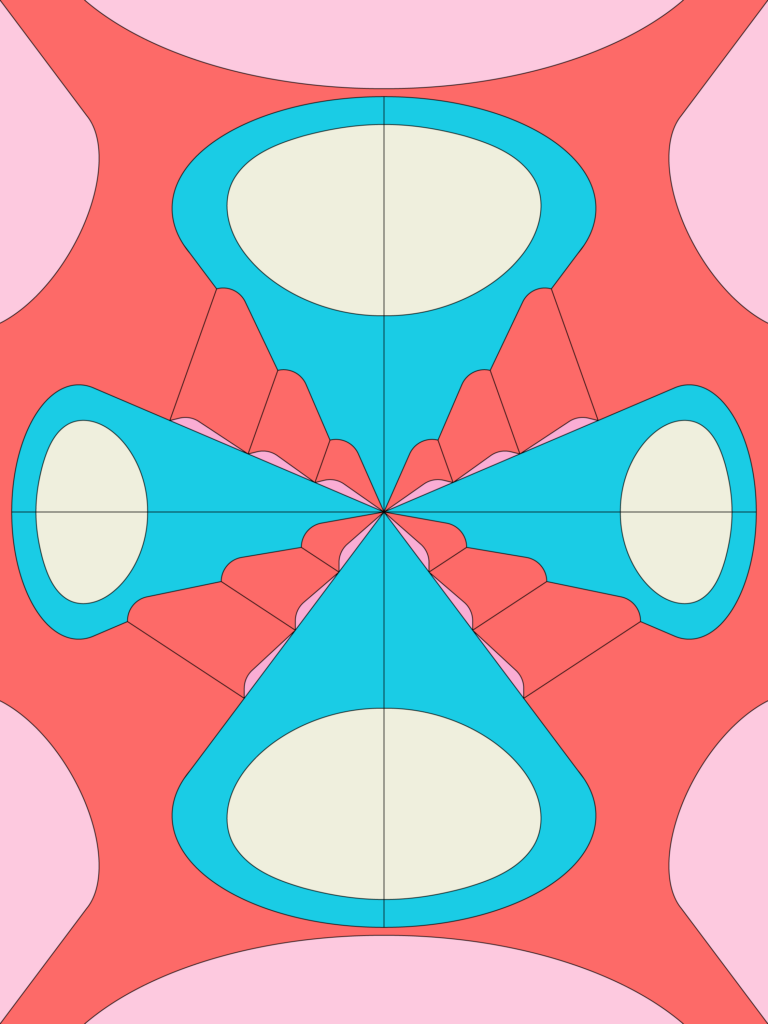
Martin: You describe yourself as a minimalist in both design and speech, choosing what is essential to “make space for meaning.” Stripping away detail can easily risk making a piece feel cold, clinical, or empty. How do you find the exact line between a shape that is perfectly distilled to its essence, and one that has been pushed so far it has lost its soul?
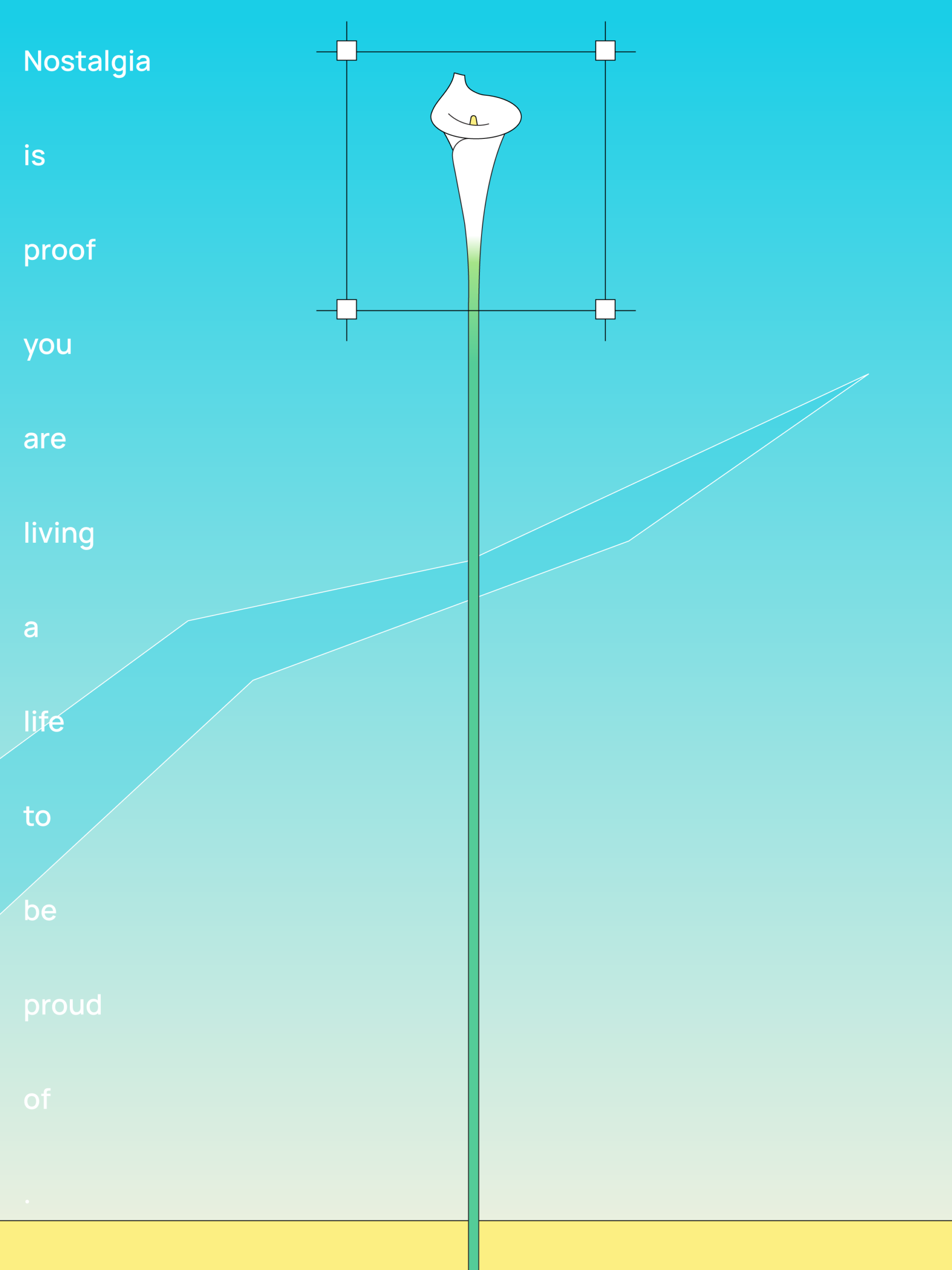
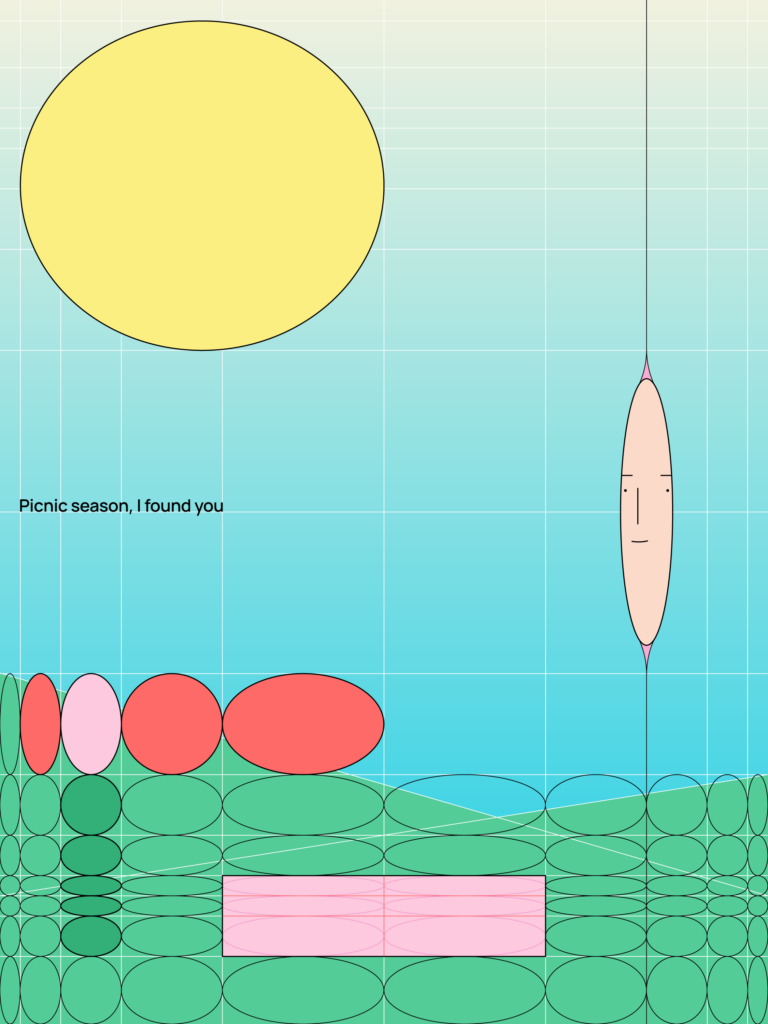
Sara: I have learned this through experience. I always have the same mantra: that my pieces, even when they are quite abstract, should not end up looking like a Windows 2000 screensaver, haha. They are fine, but that is not what I am aiming for. I want it to be clear that there was a person behind it, continuously making decisions, and not just an algorithm generating shapes for the sake of it.
Over time, I have grown fond of introducing something unexpected: a strange proportion, a tension in the composition, an element that feels slightly out of place. Not as the main focus, but as that small detail that makes the piece feel less generic.
When the work is more figurative, that role is taken by composition and the use of rhetorical devices. These are the decisions that move it away from a purely photographic or technical illustration, which also have a lot of value, but again, that is not what I am aiming for.
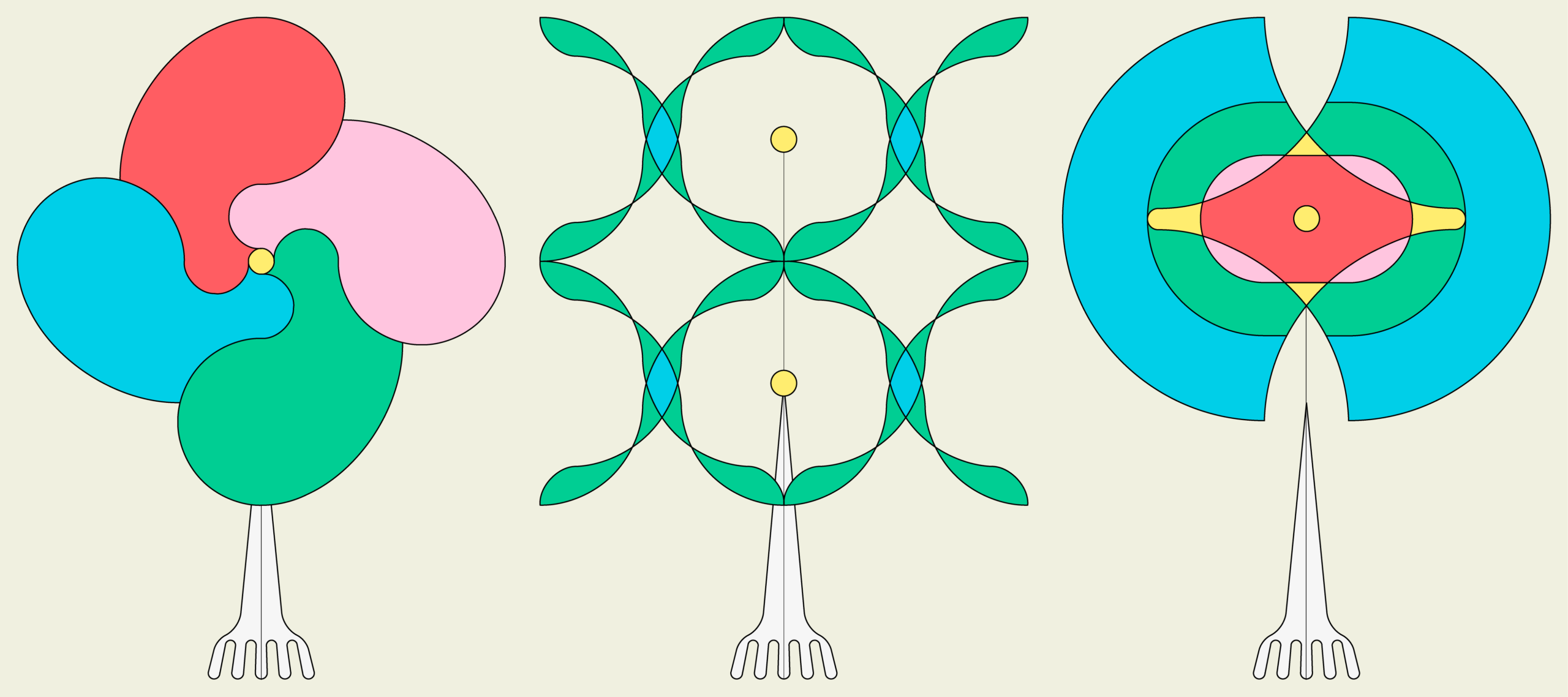
Martin: Your work bridges the gap between function and feeling, turning abstract concepts into visual systems. When you are tasked with visualizing something entirely intangible, how do you push past first-degree visual clichés to discover a new language?
Sara: I prefer to think about all the elements, relationships, and concepts around the subject I am representing, rather than the archetypal forms that symbolize it.
For example, in the case of romantic love, instead of a heart, I might think about the idea of union, of two forces that do not want to separate, or very specific moments that most of us can relate to, like waiting for that text message in the early stages of a relationship, or reaching a point where you know someone so well that you can almost guess what they are thinking. From there, I start a deeper ideation process.
These are the details that generate emotion in the viewer. A heart on its own rarely achieves that, although I do not think there is anything wrong with using it. It depends on how it is activated within a broader system. In that sense, it is also important to use formal transformations, composition, and rhetorical devices to build a language that goes beyond direct symbols.
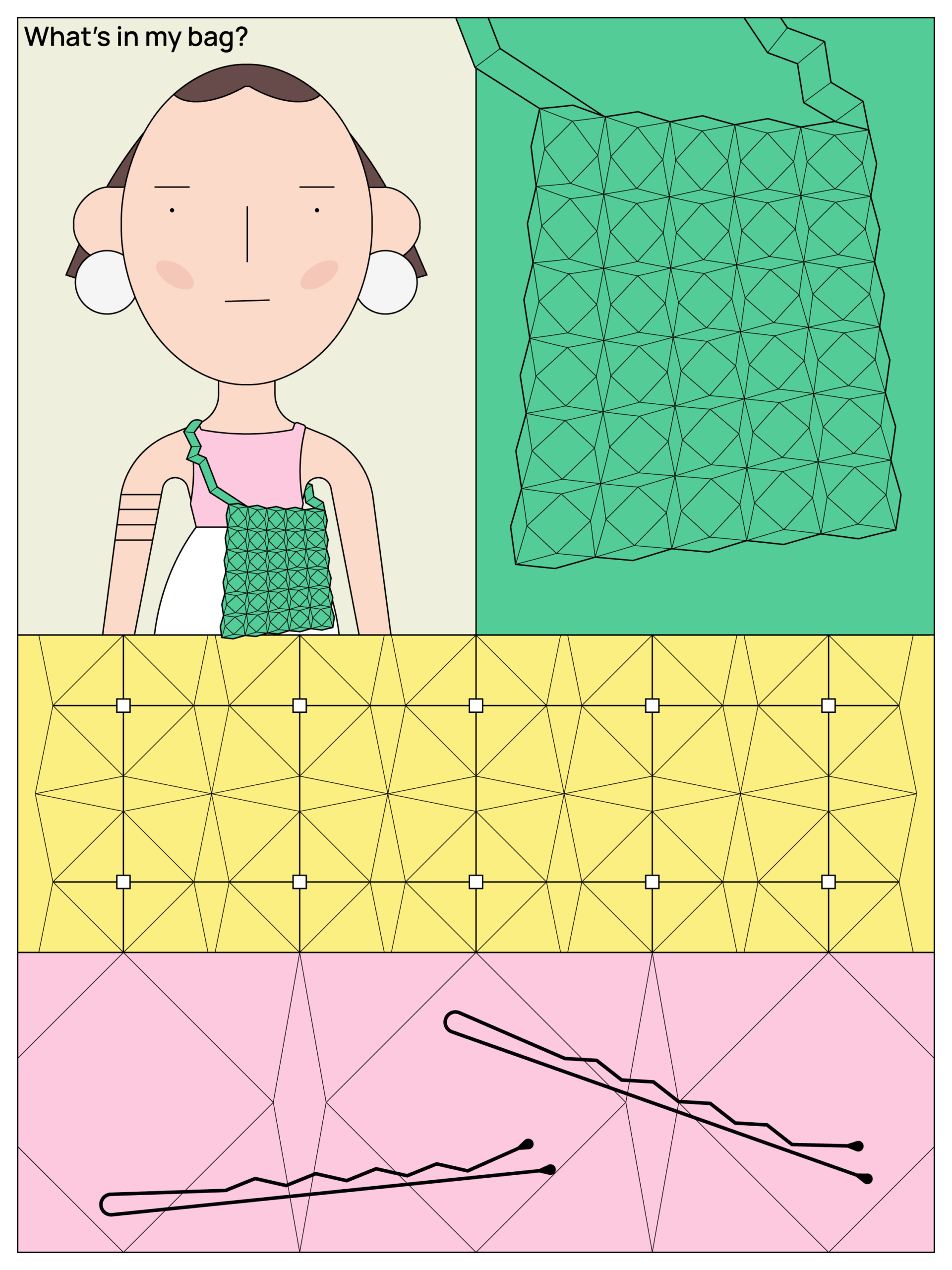
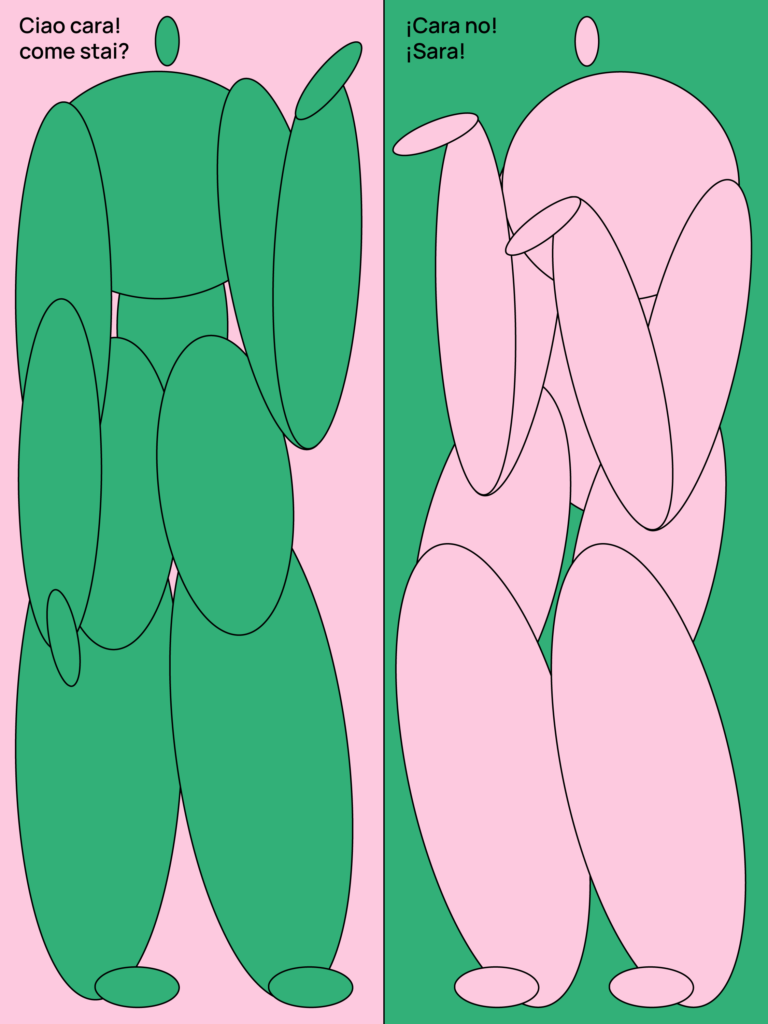
Martin: Having lived in three different countries, you’ve mentioned how much moving around has expanded your perspective. Do you view abstract geometry as a truly universal visual language that bypasses cultural barriers, or have you noticed that different cultures interpret the “meaning” of basic shapes in fundamentally different ways?
Sara: I would recommend anyone who can travel to do it, it is an investment. It expands the way you understand design because it forces you to see each context as situated: design is not isolated, but the result of a culture, and therefore each region’s processes have their own value compared to a more globalized or generic view where everything starts to look the same.
I have lived in Colombia, Spain, and Italy, three Western countries that are relatively close in terms of ways of thinking. Because of that, I cannot speak from the experience of more distant cultural contexts, where the relationship between form and meaning likely changes much more.
I do not have a definitive answer on whether a universal visual language exists. But I am interested in that ambiguity: how forms can generate emotional responses even when their meaning is not shared. I have two books of contemporary Japanese and Korean posters that are a constant source of inspiration. I do not know if I interpret them as they are meant to be interpreted there, but I do know they provoke a very strong response in me, even without fully understanding all their cultural codes.
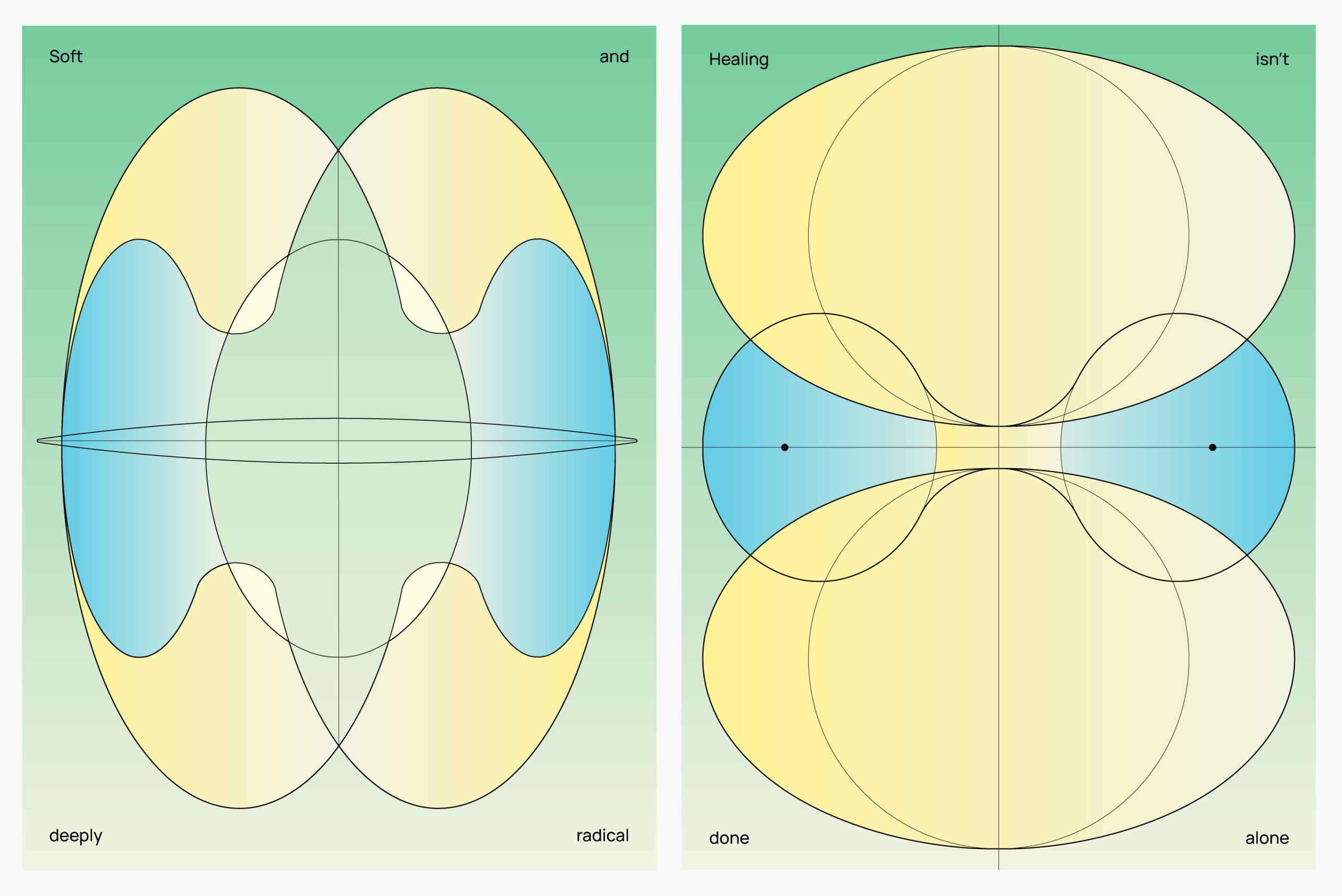
Martin: I am very excited about your workshop for the School of Systems. Can you tell me a bit about it? Why shouldn’t people miss it?
Sara: I am also very excited about this workshop! In it, we will learn how to give form to ideas: how to move from observation and concept to a coherent visual language. This is the first time I am sharing my design process in a structured way, along with the tools I actually use to build pieces that communicate something beyond aesthetics.
The workshop combines theory and practice so that students do not just replicate formulas, but develop their own visual language. Over the two days, we will first work from the observation of everyday objects to build a consistent formal language, and then from more abstract ideas such as emotions or concepts, exploring how to translate things that have no direct form into visual decisions.
The goal is for each participant not only to understand the process, but to apply it and leave with finished pieces by the end of the workshop.
I do not think this is a workshop about “learning to illustrate” in the traditional sense, but rather about going to the essence of things and building meaning through form and visual rhetoric. This is something that can be applied across many design disciplines: illustration, branding, motion, or any practice where form is used to construct meaning.
I believe the most valuable part is that the workshop does not end when the workshop ends, it begins there!
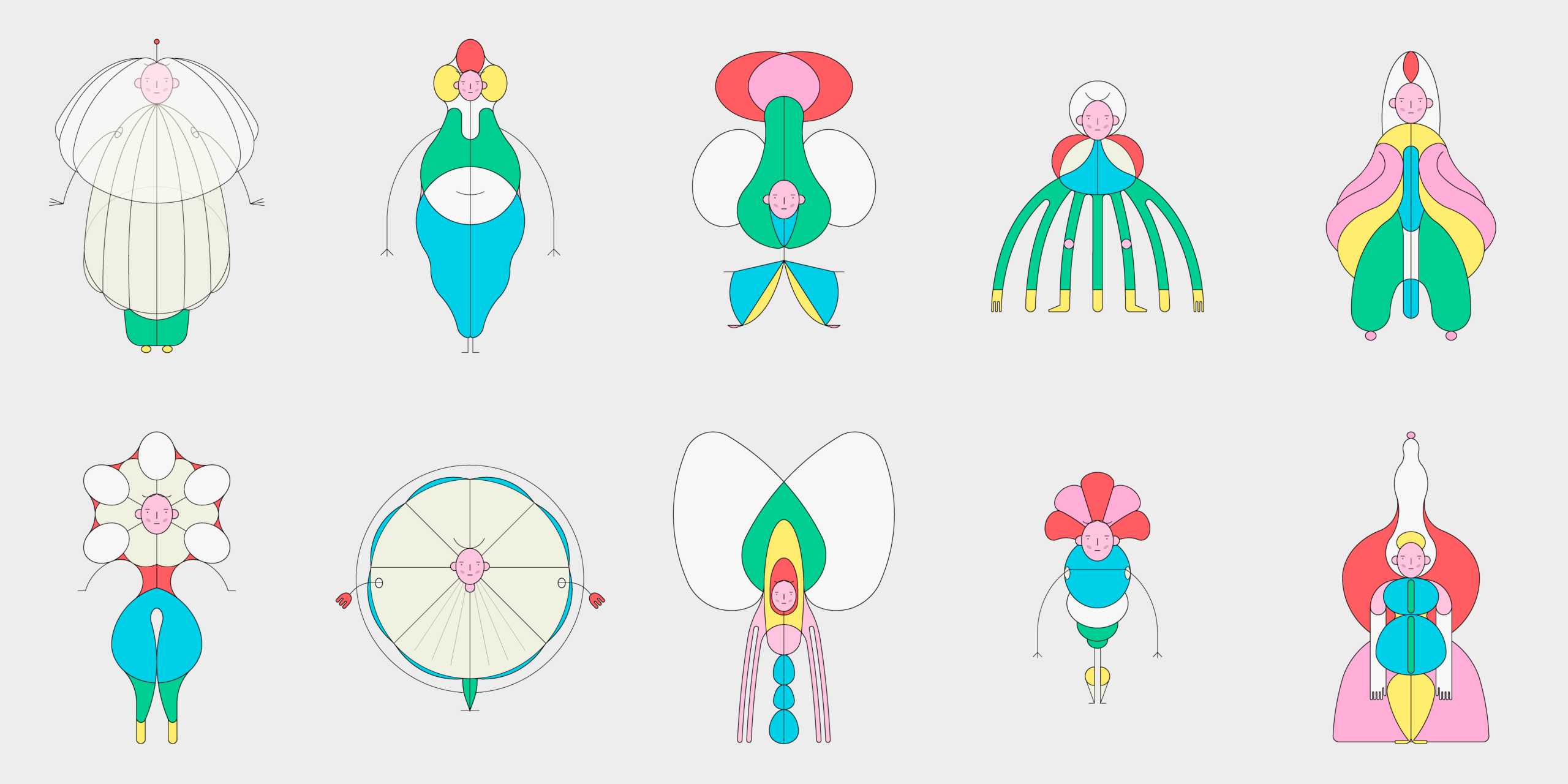
Martin: You will also be giving a course. A deep dive into your fascinating world. Can you give us a glimpse into what will happen during these six sessions?
Sara: I’m very excited about the course because it gives us the time to go much deeper than a workshop. Over six sessions, we’ll gradually build a personal illustration project, from finding a meaningful idea to translating it into a complete visual essay.
Throughout the course, we’ll explore observation, abstraction, and intentional decisions around form, composition, color, and visual rhetoric. Rather than focusing on drawing realistically, we’ll use illustration as a way of thinking, communicating, and constructing meaning through visual form.
My goal is not only for participants to create a series of finished illustrations, but to develop a visual language they can truly call their own. We’ll spend a lot of time playing, experimenting, and refining ideas, allowing the work to evolve naturally throughout the process.
By the end of the course, everyone will leave with a completed visual essay, but more importantly, with a way of thinking that they can continue applying to future projects, regardless of the medium or discipline.
Thank you Sara!
If this interview made you curious, have a look at Sara’s workshop at the School of Systems, and yes, she will teach a six-session course too. We have limited the number of participants to 15, so don’t wait too long to sign up.