INTERVIEW
Laia Ferran
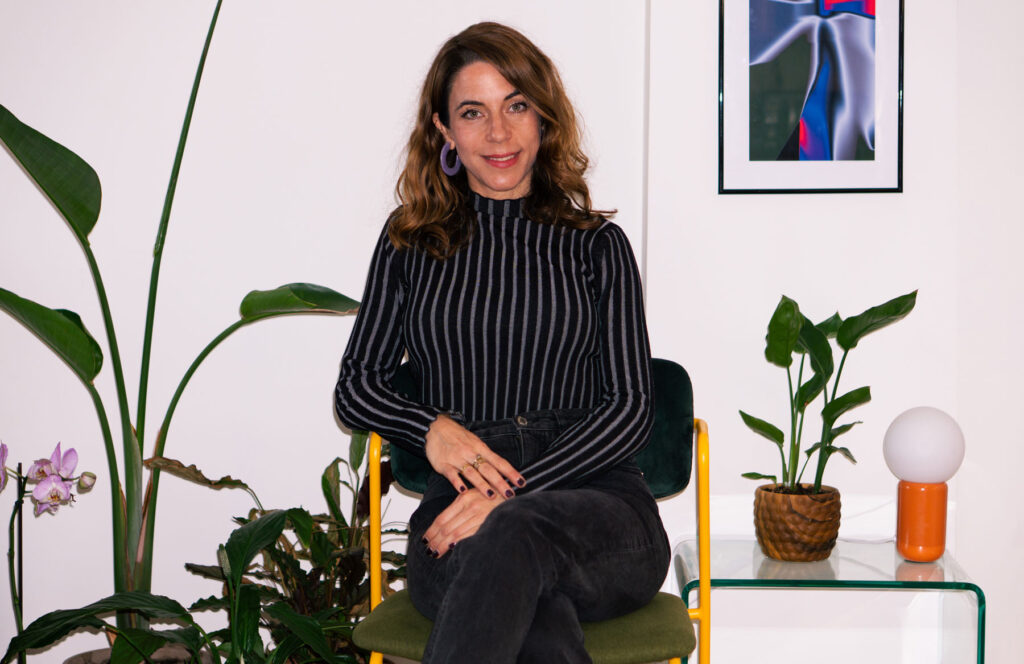
Laia Ferran is a graphic designer specializing in motion design. Her work explores translating graphic language into the audiovisual realm, using movement to build dynamic visual narratives and communicate ideas clearly and expressively. She currently balances her work at Hey Studio with freelance projects and teaching. Alongside this, she pursues a more experimental line of research focused on visual systems, immersive experiences, and real-time generated visuals. Her practice investigates the relationship between composition, rhythm, and movement, extending motion design to large-scale formats and spatial interaction. She has created visuals for live performances and collaborated with festivals such as MIRA and the Mapping Festival in Geneva.
Laia Ferran es diseñadora gráfica especializada en motion design. Su trabajo explora cómo trasladar el lenguaje gráfico al ámbito audiovisual, utilizando el movimiento para construir narrativas visuales dinámicas y comunicar ideas de forma clara y expresiva. Actualmente combina su trabajo en Hey Studio con proyectos freelance y la docencia. Paralelamente, desarrolla una línea de investigación más experimental centrada en sistemas visuales, experiencias inmersivas y visuales generados en tiempo real. Su práctica investiga la relación entre composición, ritmo y movimiento, llevando el motion design al gran formato y a la interacción con el espacio. Ha creado visuales para espectáculos en directo y colaborado con festivales como MIRA y el Mapping Festival de Ginebra.
Martin: Hi Laia, what a pleasure to finally talk about your work, which I have been following for quite a while. Something that directly clicked with me was how you made shapes and colors dance with each other. The dance seems to be organised by a system. A system of repetition and rhythm. Before we get into that, I would like to know about your history, why did this become the way you design?
Martin: Hola Laia, que placer hablar por fin de tu trabajo, que sigo desde hace bastante tiempo. Algo que me llamó la atención fue cómo hiciste que las formas y los colores bailaran entre sí. La danza parece estar organizada por un sistema. Un sistema de repetición y ritmo. Antes de entrar en eso, me gustaría conocer tu historia, ¿por qué se convirtió en tu forma de diseñar?
Laia: I studied graphic design, so I’ve always been drawn to shapes, color, and composition. But I soon realized I was more interested in what happens when those elements move. Animation allowed me to explore rhythm, repetition, and systems, almost like a visual choreography. My work sits somewhere between graphic design and motion, balancing structure with intuition.
Laia: Estudié diseño gráfico, por eso siempre me han atraído las formas, el color y la composición. Pero pronto me di cuenta de que estaba más interesado en lo que sucede cuando esos elementos se mueven. La animación me permitió explorar el ritmo, la repetición y los sistemas, casi como una coreografía visual. Mi trabajo se sitúa en algún lugar entre el diseño gráfico y el movimiento, equilibrando la estructura con la intuición.
Martin: What’s your process? Where do you start?
Martín: ¿Cuál es tu proceso? ¿Por dónde empiezas?
Laia: It depends on the project. For personal work, it often starts with music or with a small animation, movement, or visual idea that I discover while working on something else. I save those ideas and develop them later through experimentation.
For client projects, the process is much more structured. I start by researching references, developing a concept, and exploring motion directions that reinforce that concept before building the final piece.
Laia: Depende del proyecto. Para el trabajo personal, a menudo comienza con música o con una pequeña animación, movimiento o idea visual que descubro mientras trabajo en otra cosa. Guardo esas ideas y las desarrollo más tarde mediante la experimentación.
Para proyectos de clientes, el proceso es mucho más estructurado. Empiezo investigando referencias, desarrollando un concepto y explorando direcciones de movimiento que refuerzan ese concepto antes de construir la pieza final.
Martin: You have worked closely with Hey Studio. How does the process differ from working together in the same space to working on commissions on your own?
Martin: Has trabajado estrechamente con Hey Studio. ¿En qué se diferencia el proceso de trabajar juntos en el mismo espacio del de trabajar por tu cuenta?
Laia: Working at Hey Studio is very collaborative. You’re constantly exchanging ideas, getting feedback, and building something together. I’m usually involved from the very beginning of a project, so it’s really rewarding to be part of the entire creative process, from the initial concept to the final outcome.
When I work on my own, the process is much more personal. I make all the creative decisions myself and take full responsibility for every part of the project. I really enjoy having this balance.
Laia: Trabajar en Hey Studio es muy colaborativo. Estás constantemente intercambiando ideas, recibiendo comentarios y construyendo algo juntos. Normalmente participo desde el principio de un proyecto, por lo que es realmente gratificante ser parte de todo el proceso creativo, desde el concepto inicial hasta el resultado final.
Cuando trabajo por mi cuenta, el proceso es mucho más personal. Yo misma tomo todas las decisiones creativas y asumo toda la responsabilidad de cada parte del proyecto. Realmente disfruto tener este equilibrio.
Martin: What would you like to explore more in the future?
Martin: ¿Qué te gustaría explorar más en el futuro?
Laia: I’d like to explore generative art, especially the role of randomness and how software can generate visual systems on its own. I’m also interested in designing interactive experiences that explore the relationship between the digital world and the user. I think movement is a key part of that interaction, making the experience feel alive and responsive.
Laia: Me gustaría explorar el arte generativo, especialmente el papel de la aleatoriedad y cómo el software puede generar sistemas visuales por sí solo. También me interesa diseñar experiencias interactivas que exploren la relación entre el mundo digital y el usuario. Creo que el movimiento es una parte clave de esa interacción, ya que hace que la experiencia se sienta viva y receptiva.
Martin: I am super happy you will be giving an online workshop at the School of Systems. First in Spanish, and then maybe later also in English. Can you tell me a bit about it?
Martin: Estoy muy feliz de que estés dando un taller en línea en la Escuela de Sistemas. Primero en español y luego tal vez también en inglés. ¿Puedes contarme un poco sobre esto?
Laia: I’m really excited about it! The workshop is about creating animated patterns in After Effects. We’ll explore how to build motion systems from simple graphic elements using repetition, rhythm, and modular design.
Laia: ¡Estoy muy emocionada por ello! El taller trata sobre la creación de patrones animados en After Effects. Exploraremos cómo construir sistemas de movimiento a partir de elementos gráficos simples mediante la repetición, el ritmo y el diseño modular.
Martin: The workshop is only two sessions long. What would you do if you were to offer a six-session online course?
Martin: El taller dura solo dos sesiones, ¿qué harías si ofrecieras un curso en línea de seis sesiones?
Laia: I think I’d focus on experimental kinetic typography. It’s such a fascinating field because typography doesn’t always have to be about readability. It can become a graphic element in itself. I’d explore how to animate type through systems, rhythm, and repetition, creating visual compositions where letters behave more like shapes than text.
Laia: Creo que me centraría en la tipografía cinética experimental. Es un campo fascinante, ya que la tipografía no siempre tiene que centrarse en la legibilidad; puede convertirse en un elemento gráfico por sí misma. Exploraría cómo animar la tipografía mediante sistemas, ritmo y repetición, creando composiciones visuales en las que las letras se comporten más como formas que como texto.
Thank you y muchísimas gracias, Laia!
For now, we are only offering a workshop in Spanish. If you would like Laia to teach a course in Spanish or a workshop and course in English, let us know. We have limited places available for her workshop, so don’t wait too long: https://schoolofsystems.org/workshops/patrones-en-movimiento/