INTERVIEW
Adrián Moran
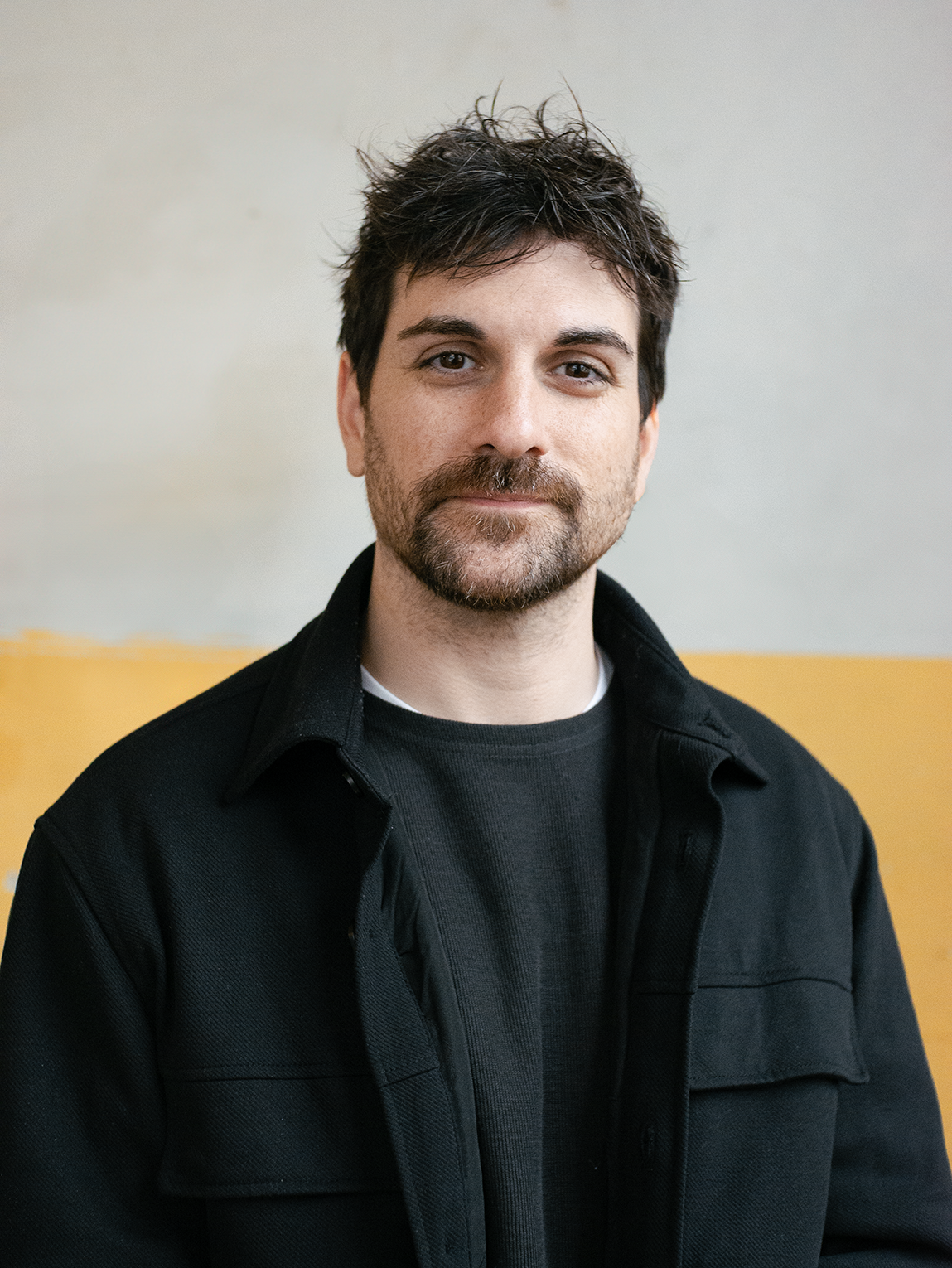
Based in Barcelona, Adrián Moran is a senior freelance 2D animator with over a decade of experience bringing concepts to life for global brands like Google, Apple, and National Geographic, as well as top-tier studios like Buck, SiblingRivalry or FutureDeluxe. Known for his ability to translate complex messages into dynamic visual narratives using simple shapes and bold colors, Adrián treats motion design as a highly expressive, yet foundational storytelling tool.
Now, he is bringing his expertise to the School of Systems to lead a beginner-friendly workshop on Cavalry. Tailored specifically for the Flexible Visual Systems community, his workshop focuses on a procedural approach to motion, showing designers how to build smart, scalable animations from the ground up. In this interview, we discuss his use of animation, what makes Cavalry such a perfect match for system designers, and how to keep procedural motion feeling playful and alive.
Martin: You’ve worked with massive brands like Google, Apple, and National Geographic. In a conversation we had last week, you said something that blew my mind. It makes so much sense; still, it wasn’t obvious to me. When you are working on these high-calibre projects it is not enough to be able to make pretty animations; you need to have a highly systemic way of working. I suppose having a systemic approach or process makes you more efficient, but also more transparent and easier to collaborate with? How do you collaborate with big agencies?
Adrián: A systemic approach is essential in fast-paced projects because it gives you and the team room to iterate quickly. With tight deadlines, last-minute feedback is inevitable, what might take days or a total rebuild in a manual workflow becomes a quick, painless adjustment when built systematically.
When working with studios like Buck or FutureDeluxe, I typically embed directly within their team, helping shape concepts and bring them to life. Lately, a big part of that collaboration involves building comprehensive motion toolkits for their clients. It’s no longer just about delivering a great piece of animation; it’s about packaging motion into an intuitive system that clients can easily scale and use as a North Star for future campaigns. That is where a systems mindset truly shines and why it has to be built into the process from day one.
Martin: Our community at the School of Systems is obviously very focused on flexible visual systems. When you approach a new animation project, how do you define a “systematic approach” to motion, and how does it change the way you work compared to doing everything manually?
Adrián: To me, a systematic approach means defining the rules, relationships, and logic behind the motion before I ever start keyframing. Drawing on my coding background, I rely heavily on expressions in After Effects to build responsive rigs. Instead of manually animating every element, I write expressions that connect properties so the design responds dynamically to changes.
Compared to traditional manual keyframing, this shifts the entire workflow. On projects with a huge volume of deliverables across different aspect ratios, formats and localizations, you don’t have to adjust every composition individually. You tweak a central control, and those updates cascade across the entire suite of exports automatically, saving hours of work while keeping the visual system perfectly consistent.
Martin: Your upcoming workshop introduces students to Cavalry, which has been making big waves in the industry for its procedural workflow. For a designer who might be used to traditional software like After Effects, what is the “aha!” moment when they realize what Cavalry can do for system-based design?
Adrián: The Aha! moment is that you don’t need to code/ use expressions, and it is really easy to start tinkering with the possibilities. Each behaviour in Cavalry acts as a coding Function and you can link the result of that function to any value you can imagine, basic values as Position, Scaler or Rotation, or more complex as Index on a duplicator or values inside other behaviours. This allows you to just explore and be creative, without worrying about coding.
The “aha!” moment is realizing you get all the procedural power of code without having to write a single line of it. It instantly removes technical friction and lets you start experimenting visually.
In Cavalry, behaviors essentially act like visual coding functions. You can easily wire the output of a behavior into virtually any parameter, from fundamental transforms like position, scale, and rotation, to complex variables like duplicator indices or nested behavior parameters. It transforms algorithmic animation into a play-driven, interactive process, so designers can focus on building intelligent systems through creative exploration rather than troubleshooting code.
Martin: The workshop is designed for beginners. If a designer is very comfortable building rigid systems but has never touched animation, what’s the biggest shift in mindset they need to make when they first open up Cavalry?
Adrián: Animation intimidates a lot of designers, and for good reason, as traditional keyframing can feel overwhelming. The beauty of Cavalry is that you can create rich motion without setting a single keyframe. By using procedural behaviors like Oscillators or Noise, movement becomes an automatic property of the design.
The biggest mindset shift for static system designers is moving from fixed outcomes to dynamic variations. Instead of designing one rigid, final layout, you are building an interactive framework. It’s about taking the rules, grids, and relationships you already use in static systems and asking, “How can these elements react to generate a whole family of distinct outputs?”
Thank you Adrián!
Book your place at Adrián’s workshop here: https://schoolofsystems.org