Interview with Seo Hyo-jung
«This is how rules function in my work. They are not restrictions. They are relational designs that come alive through interplay and change.»
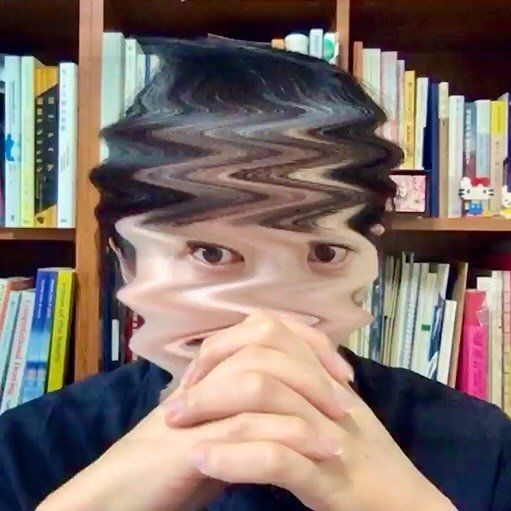
Seo Hyo-jung creates installation and performance pieces that aim to provide new perspectives on daily life by blending media technology with common objects that we encounter in our surroundings. Her interest in media literacy education drives her to explore the various possibilities of coding through Creative Computation classes and continues to work on various projects in this field. Recently, she has been dedicating her main focus on generative art, an art form that uses coded algorithms to generate images. This approach allows her to develop unique and dynamic visual forms that can evoke different emotions and reactions from the audience.
Datascape: Seoul is a generative media art installation that transforms diverse public datasets of Seoul into a dynamic visual landscape. By mapping urban data such as traffic and population movement through digital algorithms, the piece reveals the invisible patterns of the city.
Martin: Dear SEOHYO, it is a real pleasure to talk to you. First of all congratulations to your impressive work. When I saw it for the first time it immediately resonated with me. Especially the modular work. Patterns fascinate me. They seem to present at any time and place of human history. What is it that fascinates you about patterns?
SEOHYO: It’s an honor to share my thoughts with you. I work based on rules. When there is only one form, it’s hard to read the rule behind it. But when another form is placed beside it, the underlying logic becomes visible through their relationships. As multiple forms move together, new variables such as speed, distance, the way they occupy and relate within space, and rhythm emerge. Through these shifting relationships, I can tell more layered stories about how patterns grow and change over time and how order and variation coexist.
Host and Ghost
Donuimun Museum Village Media Façade
OUTfront: Kiaf x MediaArt SEOUL
Kiaf COEX Hall
Martin: This sounds like a very organically evolving process. I love the meaning you give the word “rule”. If we think of rules, we often think of rigid laws to be followed. The opposite of creativity. You describe rules as something else. You describe them as an emergent design of relationships. Can you give us a tangible example of your process?
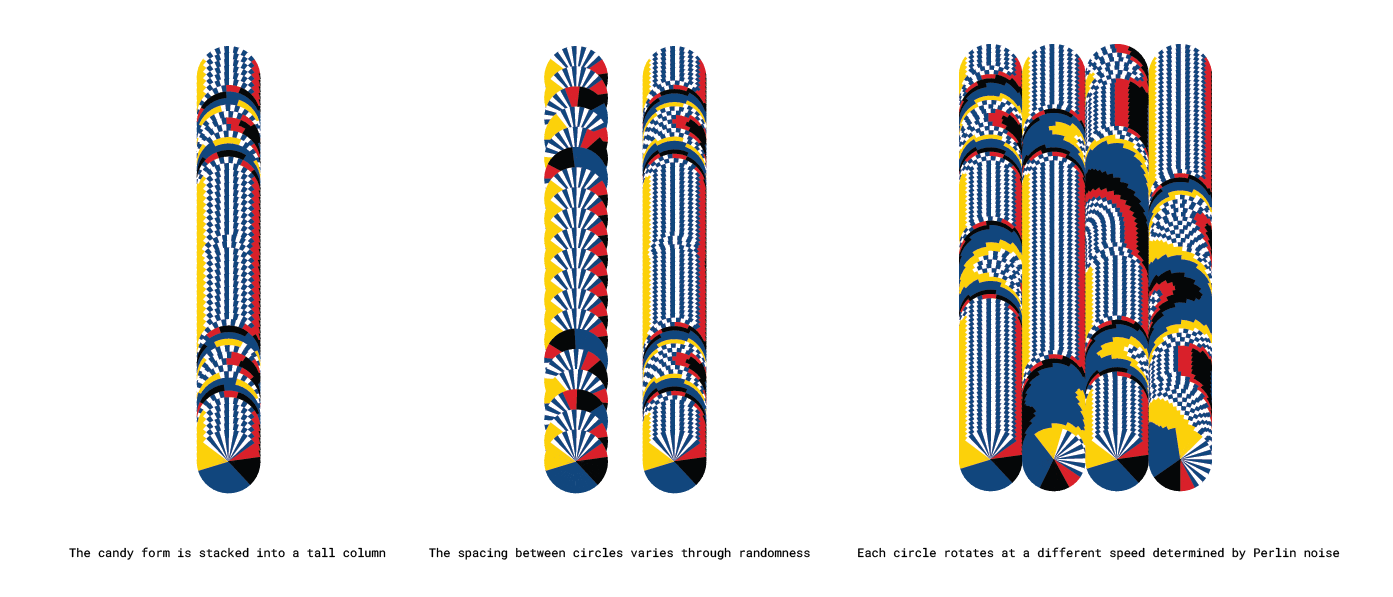
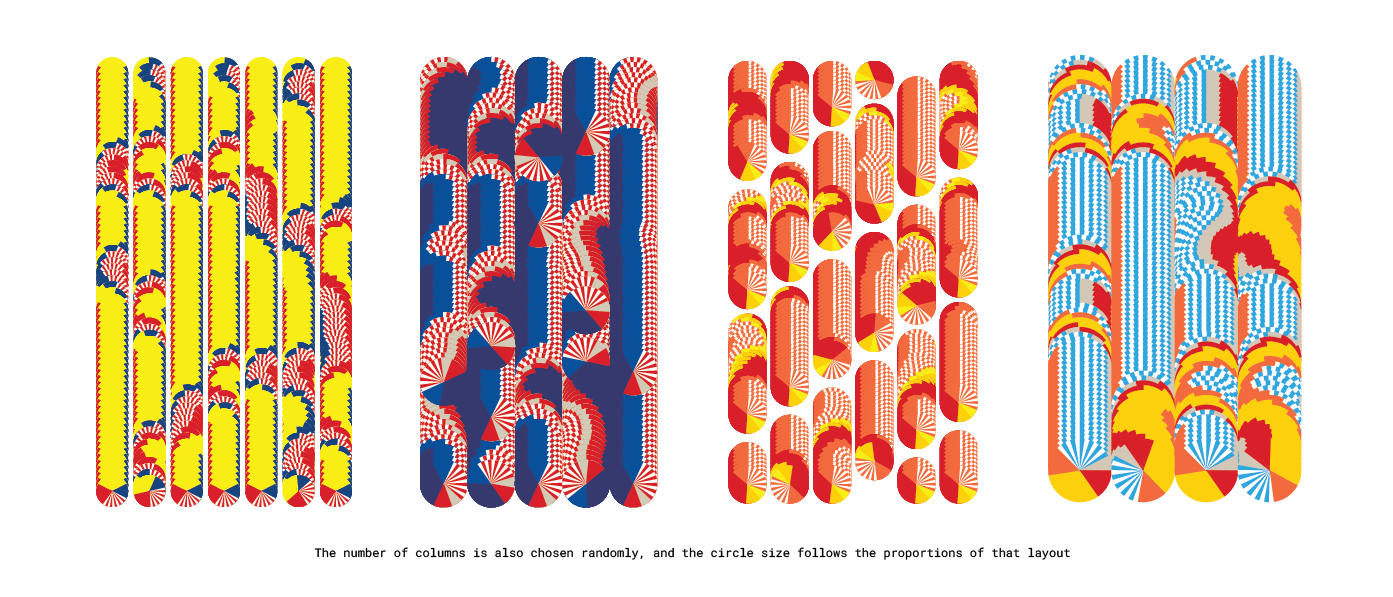
SEOHYO: One example from my practice is Okchundang: Rotational Accumulations. I began by simplifying the shape of the traditional Korean sweet into a simple radial fragment. That fragment becomes a unit that follows a set of rules. A single unit does not reveal much, but once another unit is placed next to it, a relationship emerges. The rule starts to become visible through how they align, rotate, or shift in relation to one another. As more units accumulate, the relationships grow richer. Their spacing, rotation angles, colour choices, and the way they occupy space all interact with the same underlying rule. I do not treat the rule as a rigid command. It becomes a living structure that reveals itself only when the units respond to each other. Variation comes from small changes in rotation or density, and these variations build a sense of movement and narrative across the composition. This is how rules function in my work. They are not restrictions. They are relational designs that come alive by relationships and change.

COEX S-live
Art Link Gallery
Martin: What you describe resembles a living system. Without the relationship between its organs, the organism wouldn’t be alive. Is this as well a sensation you get when you are working on your systems? That it feels right, when it feels alive? What is it that makes your designs feel alive? Apart from designing a system, where the relationships between the elements matter as much as its elements, randomness seems to play an important role in your work? Can you describe that role? How do you achieve a balance between rules and randomness? Does a well defined balance matter and if it does why?
SEOHYO: Although I have used the term “living structure,” it is not something I assume at the beginning of the work. I start by setting rules and repeatedly executing them to see whether they actually function. What matters to me is not whether the result feels alive, but whether the system can generate a range of different states on its own within the given conditions.
In my work, I consider a structure to be functioning when, under the same rules, the arrangement and relationships of the units do not settle into simple repetition. If small changes in relationships lead to different outcomes, then the system is operating as intended.
Randomness plays a role in enabling this process. I do not use randomness as the opposite of rules. It operates within the range allowed by the rules and prevents the system from stabilising too quickly into a predictable result. Small amounts of randomness shift the initial conditions each time the system is executed, and these differences accumulate to reveal a range of possible states.
The balance between rules and randomness needs to be clearly defined. When randomness exceeds the rules, the structure becomes unreadable. When rules fix all variables, the system stops. The balance I work with allows the rules to remain legible while keeping the outcome from being fully determined.
This approach is clearly visible in my Oscillating Realms series, where concentric circles follow a position-based Perlin noise rule for scaling, and randomised choices of initial positions and colour palettes enable the same system to produce a wide range of different states.
